Every cancer patient life matters, and everyone can make a difference.
The UW Program for Global Oncology and Health Equity in Radiation Oncology is a faculty-led effort to leverage the UW Department of Radiation Oncology’s multi-faceted excellence, innovation, and commitment to serve globally in order to close gaps related to radiotherapy and cancer patient survival, side effects, and access to high-quality care. Implementing world-leading research, supporting the efforts of non-profit global cancer organizations, and reaching radiotherapy centers across Africa, Latin America, the Middle East, Eastern Europe, South Asia, and Southeast Asia, the program’s unique structure is a modern model that puts patient impact and healthy equity at the forefront of every initiative.
Motivated by local experience and compassion, we envision positive change on a global scale. Today, many settings struggle with common problems:
Difficulties accessing care – A global shortage of radiotherapy centers, providers, and awareness contributes to the majority of cancer patients globally not receiving the care they need for cure or to alleviate addressable pain and suffering.
Suboptimal quality care – Amidst limited-resources, gaps in training and continuing medical education exist that are often the key to providing the highest quality care. We want cancer care received to be the best it can be, no matter where the patient is.
Lack of political awareness – Globally, radiation oncology is one of the smallest fields in medicine. In fact, in the U.S., it accounts for less than 1% of cancer care costs, despite being used in over 50% of cancer patients. In many low- and middle-income countries, the lack of support and visibility of radiation oncology is even poorer. However, in these countries, radiotherapy is even more important (indicated in over 70% of patients due to more common advanced stages of disease). We need to improve this landscape.
For those of us who are familiar with the importance of having accessible, timely, and high-quality radiotherapy, this is an opportunity to give back to those who face similar challenges.
Our radiation oncology department is committed to addressing cancer care disparities locally, regionally, and abroad in low- and middle-income countries where over 70% of all cancer diagnoses occur, despite having far fewer combined resources than high-income counterpart countries. In fact, the state of Washington alone has more radiotherapy resources than most countries do in Latin America, Africa, the Middle East, and Southeast Asia. We have learned from our development and experience, and it is our academic mission to create and spread knowledge to help improve the world how we can.
We apply our radiation oncology expertise to contribute in as meaningful ways as we can to the cancer care community.
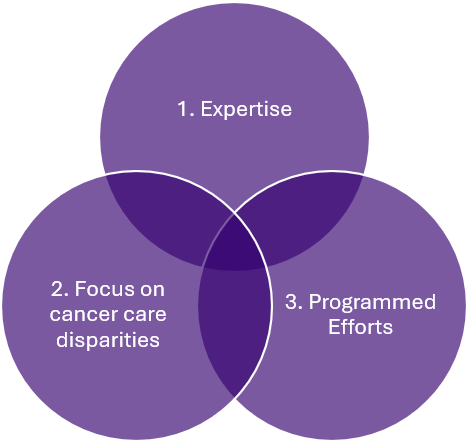
Radiation oncology is a complex field with technical details that are essential to patient care. Fortunately, we have a large, smart, and collaborative team at UW.
We apply our clinical, research, and teaching expertise to help others.
Our faculty and trainees contribute knowledge across medical physics, radiobiology, clinical care, technology, and system implementation.
These details matter – many are vital for accurate, safe, and effective treatments.
Disparities in cancer care are unacceptable. We are committed to closing them – locally and globally:
Many radiotherapy centers are overburdened, and patients often can’t finish treatment.
Even with the same equipment, treatment outcomes vary widely by setting. Poorer settings should not equal poorer care.
Many radiotherapy professionals seeking opportunities for further education and training are unable to find or afford them in their own country where radiation oncology remains under-recognized.
Over 70% of cancer deaths occur in settings with <10% of the world’s resources. We need to be able to effectively treat cancer where it occurs.
In Seattle, we have partnered with several respected non-profit organizations in our community that support other cancer centers around the world in limited-resource settings.
Rayos Contra Cancer (www.rayoscontracancer.org)
Provides free education and training virtually for over 8,000 radiation oncology professionals in Latin America, Africa, Middle East, Eastern Europe, South Asia, and Southeast Asia.
UW helps promote novel research and develop curricula that can be used by volunteer educators, including many of our own faculty.
Bio Ventures for Global Health (www.bvgh.org)
Works closely with an African consortium of over 40 cancer centers, supporting their priorities and longitudinal growth.
UW helps with onsite visits, needs assessments, and in-person training to support centers as they upgrade radiotherapy technology.
Binaytara Foundation (www.binaytara.org)
Dual mission of supporting hematology/oncology education throughout the United States while building a cancer hospital in the Janakpur region of Nepal, filling a critical gap for the country.
UW helps participate in research and educational conferences and will help the new radiotherapy department in its growth.
And as we grow, we hope to be a model for how radiation oncology departments can work with diverse, impactful members of the community for global impact.
Research
Clinical Services
Financial Sustainability
This effort requires the best of what we have to offer.